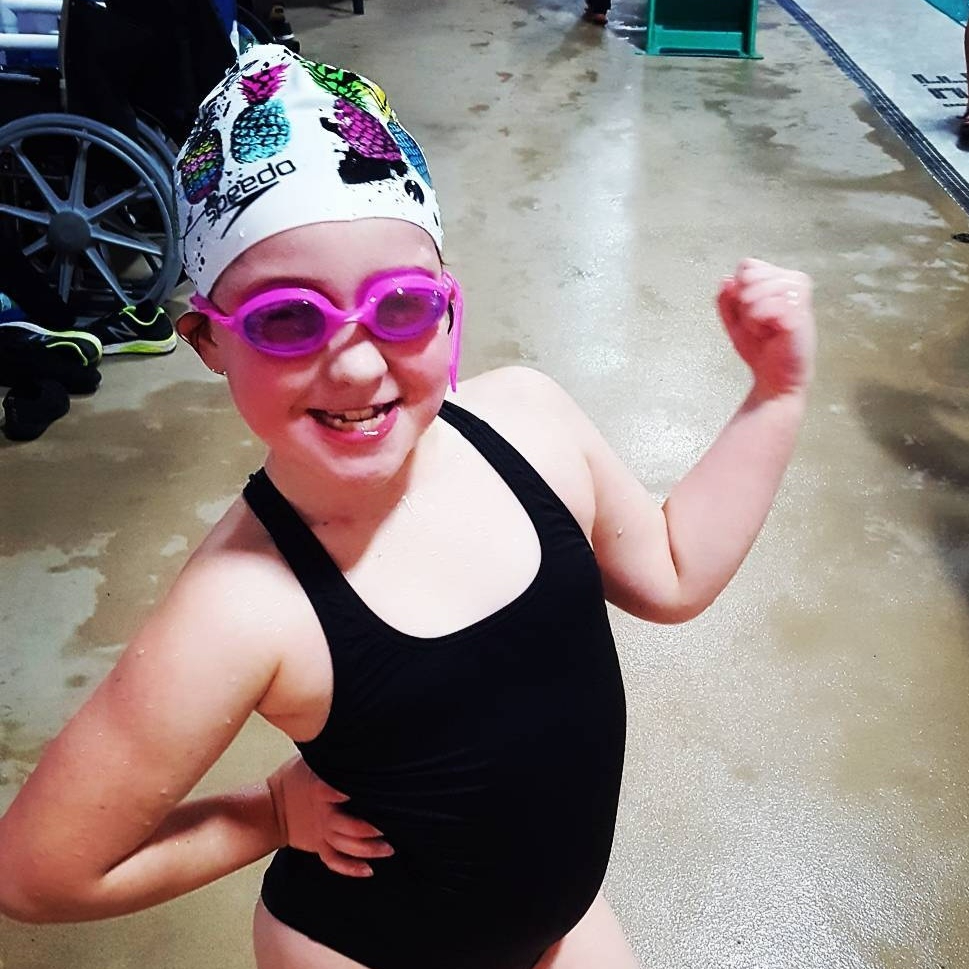
Back in September I was sitting, fully dressed, on the third step of the public swimming pool with the fabric from my leggings sucking the water from the pool onto my calves, up my thighs, and into a little puddle beneath me. I found myself in this uncomfortable position, half in and half out of the pool, because I was trying to support my daughter to join her currently in progress swimming lesson. She had been practicing her floating skills all summer in her pink goggles with pretend cat ears, and yet, every time the instructor prompted her to join, she recoiled from his gaze. As I glanced up from my wet perch on the stairs, I saw her brother sitting on the pool bleachers with his shoulders hunched, chin resting in his palms, eyebrows heavily scowling in my direction, seemingly offended that I forced him to observe his own swimming lesson even though he refused to participate. Watching him, with his towel beside him, defeat crept into my heart. Two kids, two swimming lessons, zero success at having them willingly participate.
Shortly after that day I wrote the following, mostly for myself, but maybe it will bring you some comfort, as it did for me, if you find yourself with wet pants on the edge of a swimming pool one day:
The parental feeling of disappointment and frustration at your child’s lack of joyful participation in group sports is one I know well. It’s usually accompanied by a tiny feeling of envy that the other caregivers appear to have children who effortlessly dive, jump, run, or skate excitedly to join in. My kids frequently put on the brakes when we show up to a new sporting activity. It’s like the idea of a new sport, or team, or club is the best idea they’ve ever had, but when the day to participate arrives, the experience turns into the worst idea we’ve ever had.
As caregivers we often feel pressure to give our children opportunities to build confidence and learn life skills through sports. We must make it possible for our children to experience these things so they can be teachable, coachable, and confident (and practically speaking, so they don’t drown because some of us live on an Island). Yet the message to caregivers is also, don’t over schedule them, push them too hard, or force them into sports they don’t enjoy. Parenting is so fickle like that. It’s a very thin line between good parenting and awful parenting and we’re all out here trying to walk the line the best we can.
I’m sure there are some experts who offer great suggestions on how to get hesitant kids into sports, but I’m not one of them. I’m more of an expert at empathetically holding my non-participating child’s hand, whispering encouraging words into their ears while they plaster themselves to my side, seeking safety and comfort from the terrifying idea of playing. So, I offer us, the hand-holding caregivers whose kids won’t get out of the car, off the sidelines, into the water, or onto the court, this:
Our children don’t need to participate to find success in sports. When we support our children through the uncomfortable experience of trying something new by listening to their hesitation, respecting their fear, and seeking to understand their refusal regardless of our own desire for them to play, we show our children that their thoughts and feelings matter. We give them the experience of feeling seen. It doesn’t matter what the underlying reason is for their feelings about not wanting to join, it only matters that we show them that we see their struggle and we believe that it is real for them.
Showing up for our kids with patience and presence, creates the foundation for self-confidence and self-worth that we often seek to create through success in athletics. For the hand-holding ones, like me, our version of success has the potential to produce future adults who have experience navigating adversity and building on failed attempts. Most importantly, these sideline-sitting children become adults who know that there is no correlation between their achievement and their value and that finding success in any arena first requires connection and relationship.
And now, six months later, one of those two kids who refused to get in the pool dives into swimming lessons like she was born a mermaid. The other tiny human of mine still refuses to attend which gives me continued opportunities to practice this non-participatory, empathetic, approach to athletics. Lucky me!
So, next time I’m sitting on the sidelines trying to get my kid to dip a metaphorical, or actual physical, toe in, I’m going to trust that this is what success in sports looks like too. And I’m cheerleading for you to do the same.
–Michelle